

Industrial access & material handlingEquipment selection support
Industrial Man Lifts

Explore Industrial Man Lifts

Equipment departments

Man Lifts & Aerial Work Platforms
Work Platforms & Access Stands
Industrial Ladders
Scaffolding
Material Handling
Loading Dock Equipment
Aviation & Ground Support
Facility Safety
Guides & checklists
Shop equipment

The Right Way to Keep Cranes in Good Shape

September 11, 2017 news

Industrial cranes are used to perform heavy duty tasks almost on a daily basis. Regular inspection and maintenance of your cranes can prolong their operational lives by reducing w…

Super-Master Mobile Hydraulic Floor Cranes
Equipment example: Super-Master Mobile Hydraulic Floor Cranes. Confirm the selected model and configuration for your application. View equipment

Some original inline illustrations are unavailable. The equipment photograph above is identified separately.

Industrial cranes are used to perform heavy duty tasks almost on a daily basis. Regular inspection and maintenance of your cranes can prolong their operational lives by reducing wear and tear experienced by their moving components. In this blog, we discuss how you can ensure that your crane always performs at maximum efficiency. Tips for keeping your cranes in top shape Since cranes have highly complex mechanical systems, they need to be properly inspected by trained technicians on a routine basis. Dust, high ambient temperatures, overloading and several other factors can adversely affect a crane’s performance if its maintenance requirements are not met adequately. Here are a few key tips to ensure that your cranes remain in good shape and always perform at 100% efficiency:
  • Routinely check the hoist wire and luffing wire to ensure that they are strong enough to support heavy loads. If these wires show signs of damage, replace them immediately!
  • The crane’s filters must be cleaned at regular intervals in order to prevent an excessive buildup of differential pressure.
  • The hydraulic fluid (oil) in the crane must be changed frequently. Also, be sure to check whether the fluid level in the crane is maintained at the level prescribed by the manufacturer of the crane.
  • Oil testing must be conducted every 60 to 90 days to assess the extent of internal wear and tear within the cranes.
Original illustration unavailable: oil-testing
  • Make sure that cut out switches and limit switches are always in proper working order.
  • Inspect the electrical control systems to avoid unfortunate mishaps
  • All moving parts of the crane must be properly lubricated to minimize wear and tear due to friction. This includes the motors, pumps, swivels, and other mechanical device present in them
  • Never use a crane with a malfunctioning or worn out part as it can cause the machine to develop several other mechanical problems
Original illustration unavailable: crane-with-malfunctioning-part
  • Clean the cranes at least once a week to ensure that there is no accumulation of dirt on its vital components
  • Check the hydraulic system for cracks or leakages. Insufficient hydraulic fluid pressure due to leakages can reduce the crane’s efficiency and put unnecessary stress on its mechanical components
  • Make sure that all the electrical components of the crane are properly grounded. Improper grounding mechanisms can be quite dangerous and can pose a serious shock hazard
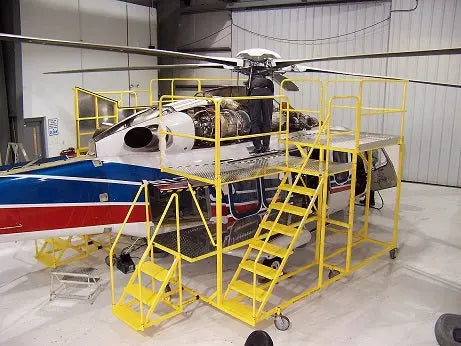
If you are looking for the finest industrial maintenance equipment in the market, get in touch with Industrial Man Lifts. We offer all kinds of man lifts and industrial maintenance equipment like mobile work platforms, fixed and rolling ladders, andaircraft maintenance stands. To order our quality products, get in touch with us by calling our toll-free number (727) 490-8839, or by sending us an email at [email protected].  

FAQ

What does this guide cover?

This article explains The Right Way to Keep Cranes in Good Shape and the decision points that typically matter for industrial buyers.

How do you choose the right access equipment for the job?

Start with working height and footprint constraints, then confirm capacity, safety requirements, and how often the equipment must be repositioned.

Which categories should I compare next?

Browse these related categories: Cranes & Jibs , Heavy Duty Ladders , Industrial Stairways , Industrial Turntables .

How do I get pricing or confirm fit?

Request a quote with your application details and we’ll respond with pricing, options, and best-fit guidance.

Related Equipment

Relevant products referenced or implied by this article.

Explore More Categories

Category-first browsing helps you compare specs fast.

Related Articles

More resources that may help your equipment selection.

More guides & checklists

High-value resources designed to be easy to reference and share.

Resource hub

Ready to get pricing?

Need pricing or availability?

Request a quote with your requirements and our team will follow up fast.

No obligation B2B sourcing

Get pricing for this category

No obligation • Specialists

Get Pricing